Newsletter Subscribe
Enter your email address below and subscribe to our newsletter
Enter your email address below and subscribe to our newsletter

 ByJohn A
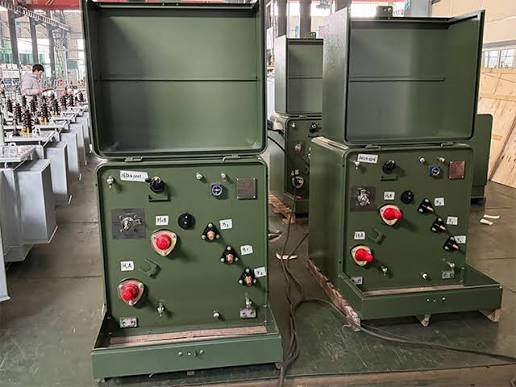
A 15kva transformer 1 phase setup can provide a practical way to step voltage up or down for equipment, buildings, workshops, control systems, and other electrical applications with relatively modest power requirements. Choosing the correct transformer involves more than matching the 15 kVA rating. Voltage levels, frequency, load characteristics, installation conditions, and expected operating hours all affect transformer selection and performance.
The 15 kVA rating describes the apparent power capacity of the transformer. “kVA” stands for kilovolt-amperes and is commonly used for transformer sizing because transformer capacity depends on both voltage and current.
A 15 kVA transformer can supply up to 15,000 volt-amperes under its specified operating conditions. The actual usable power in kilowatts depends partly on the power factor of the connected load.
For a single-phase transformer, the relationship between apparent power, voltage, and current can be expressed as:
kVA = (Voltage × Current) ÷ 1,000
For example, at 240 volts, a 15 kVA transformer has a theoretical full-load current of approximately 62.5 amps on that side. The corresponding current on another voltage side will differ.
Transformer manufacturers specify primary and secondary voltages, so the nameplate should always be checked before calculating operating current.
A single-phase transformer is designed for electrical systems using a single alternating-current phase. This makes it different from three-phase transformers, which are commonly used for larger industrial loads and three-phase distribution systems.
A 15kVA transformer 1 phase may suit applications where the electrical demand does not require a three-phase supply. Smaller commercial properties, workshops, rural installations, lighting systems, control equipment, and certain machinery can use single-phase transformers where the electrical design permits it.
The choice should be based on the actual supply and load arrangement rather than simply selecting the smallest available transformer.
Transformers can perform two basic voltage conversion functions.
A step-down transformer reduces the incoming voltage to a lower voltage suitable for connected equipment. This configuration is common where machinery, controls, lighting, or other electrical equipment requires a different voltage from the available supply.
A step-up transformer increases voltage from a lower level to a higher level. The appropriate arrangement depends entirely on the electrical system and equipment specifications.
The voltage ratio is one of the first details to check when purchasing a transformer. A 15 kVA rating alone does not indicate whether a particular model will work for an installation.
Transformer sizing should account for the equipment that will be connected to it. Resistive loads such as heaters and some lighting systems can behave differently from motors, compressors, pumps, and other inductive equipment.
Motors can draw significantly higher current during startup than during normal operation. A transformer selected only according to the motor’s running load may therefore experience excessive voltage drop or other operating issues during startup.
The type of load, starting current, duty cycle, and possibility of future expansion should be considered before selecting a 15 kVA unit.
Transformer efficiency affects operating costs, particularly in installations where the unit remains energized for long periods. Even when a transformer is not supplying its full rated load, it can consume a certain amount of energy through core losses.
Copper losses also increase as the load rises. A properly sized transformer can therefore help avoid unnecessary losses while providing enough capacity for the connected equipment.
Manufacturers normally provide efficiency information, temperature-rise ratings, impedance values, and other technical specifications that can be used during equipment selection.
A transformer should be installed according to the manufacturer’s instructions and applicable electrical codes. Location, ventilation, ambient temperature, enclosure type, clearances, grounding, and protection requirements all need consideration.
A transformer installed in a hot or poorly ventilated area may operate at a higher temperature than intended. Excessive heat can affect insulation and shorten equipment life.
The installation also needs suitable overcurrent protection. Primary and secondary protection requirements vary according to the transformer design and electrical system, so these details should be determined by a qualified electrical professional.
A 15 kVA transformer may be available in different construction types, including dry-type and oil-filled designs. The appropriate option depends on the installation environment and application.
Dry-type transformers use air and solid insulation rather than liquid insulation. They are commonly considered for indoor commercial, industrial, and building applications where liquid-filled equipment is unsuitable or unnecessary.
Oil-filled transformers use insulating liquid for cooling and insulation. They are frequently associated with outdoor and distribution applications, although their suitability depends on the installation and applicable safety requirements.
Comparing enclosure ratings, cooling methods, insulation systems, temperature ratings, and maintenance requirements can help determine which configuration is appropriate.
Transformer nameplate information provides essential details about how the unit is intended to operate. Typical information includes rated kVA, primary voltage, secondary voltage, frequency, phase, impedance, temperature rise, insulation class, and connection information.
Some transformers also provide multiple taps that allow voltage adjustment within a specified range. Taps must be configured correctly and should not be changed while the transformer is energized unless the equipment is specifically designed for that operation.
Incorrect connections can damage the transformer or connected equipment and create serious electrical hazards.
See also: merging Trends in Adoption Technologies
A 15 kVA single-phase transformer can be suitable for a range of smaller electrical applications. Examples include:
The actual suitability depends on voltage requirements and the characteristics of the connected load.
Purchasing a transformer should involve more than comparing prices. Technical specifications, manufacturing standards, warranty coverage, documentation, delivery requirements, and after-sales support should all be considered.
A supplier should be able to provide clear information about the transformer’s input and output voltages, frequency, kVA rating, connection arrangement, enclosure, cooling method, and applicable standards.
For installations involving motors or unusual loads, providing the supplier with detailed load information can help avoid selecting an unsuitable unit.
A 15kva transformer 1 phase can be a useful choice for applications requiring single-phase voltage conversion at a moderate power level. Its suitability depends on the relationship between the transformer rating and the electrical characteristics of the intended load.
Before purchase or installation, confirm the primary and secondary voltages, frequency, current requirements, load type, environmental conditions, protection arrangements, and applicable electrical standards. Having these details available makes transformer selection more precise and reduces the risk of performance problems after installation.
For safety, transformer installation, wiring, protection, and commissioning should be carried out by appropriately qualified electrical professionals.